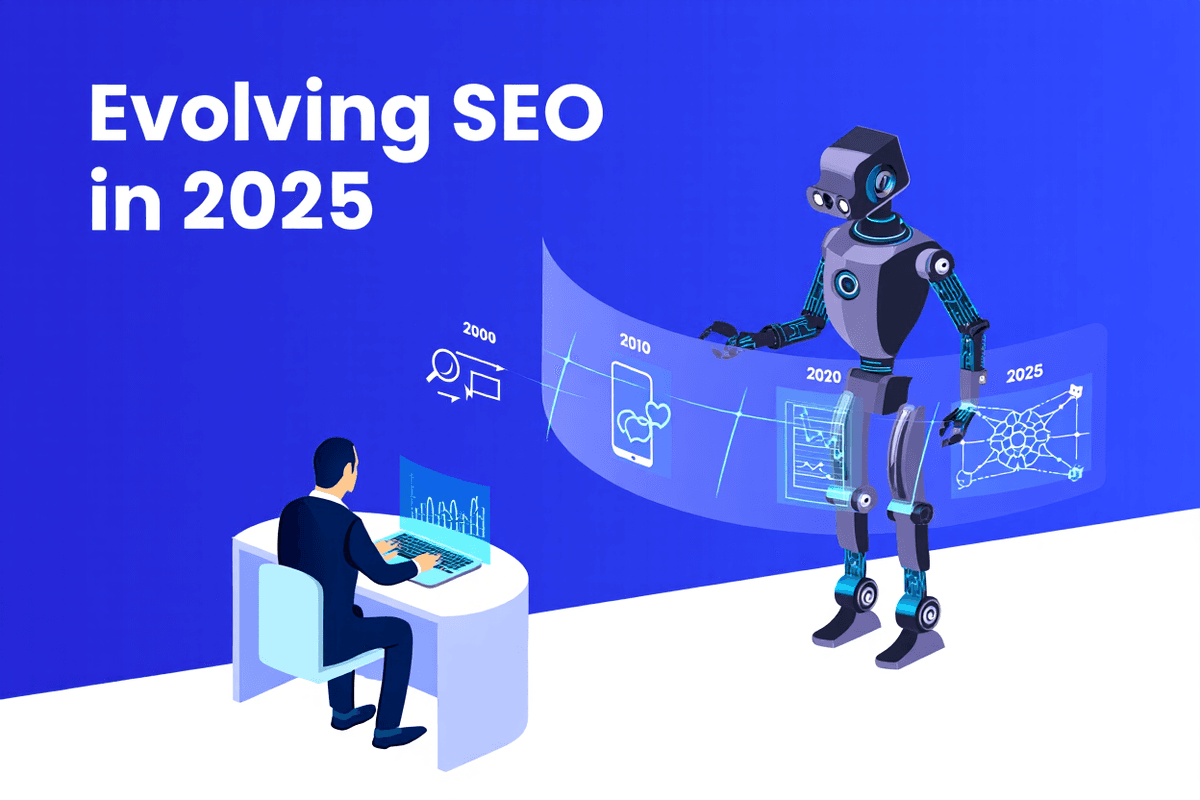
Evolving SEO in 2025
An in-depth analysis of how search engine algorithms, AI, and human intent are reshaping SEO in 2025 — from voice queries to social signals and user trust.
In 2025, SEO has transformed from keyword manipulation into an art of precision, empathy, and data science. Google’s evolving algorithms now emphasize user satisfaction metrics like dwell time, semantic context, and content authority — meaning the old keyword-stuffing strategies of the 2010s are officially extinct. The new SEO landscape is driven by how intelligently content interacts with human intent. Every marketer today must understand that Google doesn’t just index text — it interprets meaning, tone, and even trustworthiness. With machine learning models like MUM and Gemini integrated deeply into search ranking systems, engines now understand relationships between topics rather than exact phrases. This has forced businesses to optimize for relevance over rigidity, creating content ecosystems where blogs, videos, and social discussions all work together to build brand authority. SEO in 2025 is no longer about visibility alone; it’s about credibility, authenticity, and meaningful engagement across multiple platforms.
One of the most fascinating shifts is the rise of multimodal search. Users no longer type queries alone; they speak, upload images, and even describe emotions to get results. This makes optimizing for voice and visual content indispensable. For example, local SEO now depends heavily on conversational tone and natural phrasing — people say, 'Where’s the best organic café near me?' rather than 'organic café + location.' Brands that embed this natural language into their schema and meta structures are reaping the rewards. On the visual front, Google Lens and Pinterest Lens are creating a new SEO branch — visual discovery optimization — where the metadata behind images influences ranking as much as captions do. This is especially relevant for eCommerce, travel, and lifestyle brands that depend on visuals to attract engagement. To succeed, brands must combine structured data, AI-driven content creation, and strong storytelling, ensuring their content is recognizable and useful across every possible input type — text, voice, and visual.
However, one of the biggest undercurrents in 2025 SEO is the fusion of social influence and search ranking. Platforms like TikTok, Instagram, and YouTube are now primary search engines for younger audiences, particularly Gen Z and Gen Alpha. This means SEO isn’t confined to Google anymore; it’s now about platform-agnostic discoverability. Algorithms on these platforms favor authenticity, watch time, and comment interaction — metrics that mirror search engine engagement factors. Savvy marketers now build SEO strategies that integrate both Google and social discovery. A video clip that performs well on Instagram Reels or TikTok can generate massive brand searches on Google the next day, signaling trust to search algorithms. In this hybrid landscape, successful SEO campaigns focus on building emotional resonance through content while maintaining technical optimization behind the scenes — clean site architecture, mobile-first indexing, structured data, and optimized Core Web Vitals still matter deeply. The difference is that engagement and authority signals now travel across platforms in ways we couldn’t measure before.
Conclusion
The future of SEO is undeniably human-centric. Brands that treat content as a relationship, not a broadcast, will dominate rankings. Artificial intelligence will continue to refine search, but it will also empower content creators to scale quality through better research and personalization. SEO professionals must evolve into multidisciplinary strategists — part data scientist, part storyteller, part UX designer. The next generation of SEO tools focuses less on volume and more on precision: understanding intent clusters, emotional sentiment, and behavioral data to predict what users want before they even search. The ultimate goal is not to chase the algorithm but to serve the audience so well that algorithms naturally align. In essence, SEO in 2025 has become a mirror of human curiosity. The more brands can understand and empathize with that curiosity, the more sustainable their organic growth will be. From micro-moments to immersive AI-driven discovery, the marketers who adapt now are shaping the future of visibility itself — not by gaming the system, but by mastering relevance.